Heating a warehouse isn’t as straightforward as heating an office or commercial building. Large open spaces, high ceilings, loading doors and varying occupancy all influence how heat behaves, making it essential to choose a system designed specifically for industrial environments.
Whether you’re designing a new logistics hub, upgrading an existing warehouse or looking to reduce operating costs, the right heating solution can improve comfort, increase energy efficiency and support long-term decarbonisation goals.
This guide explains the different warehouse heating systems available, where each performs best and the key factors to consider when selecting the right solution for your building.
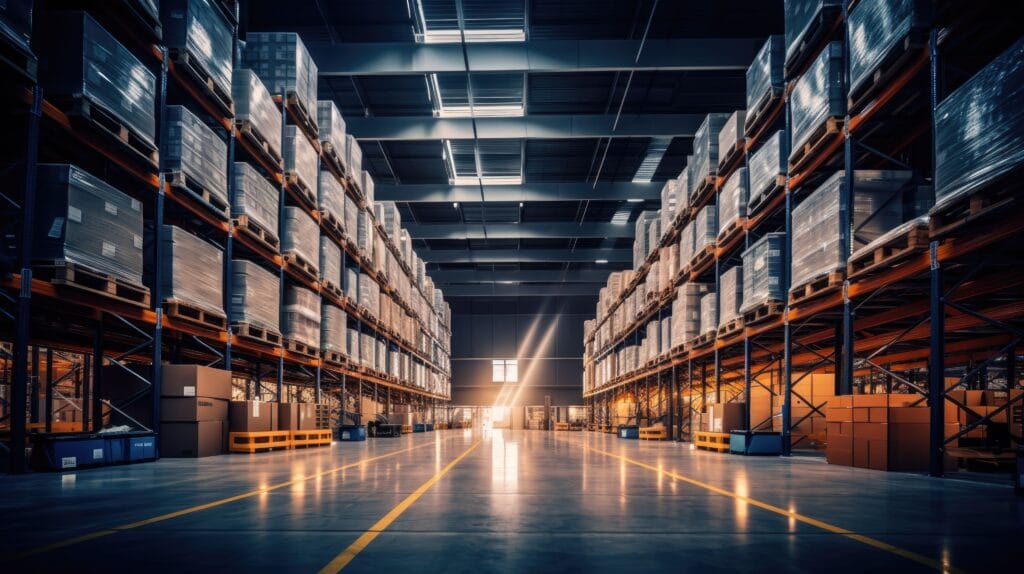
Warehouses present unique heating challenges that aren’t found in most commercial buildings.
High roofs and large internal volumes allow warm air to rise, creating temperature stratification, where heat collects at roof level while employees remain cold at floor level. Frequent opening of loading doors, extensive pallet racking and mezzanine floors can also affect airflow and temperature consistency.
As warehouses become larger and taller, distributing heat effectively often becomes more important than simply generating it.
A well-designed warehouse heating system should:
Maintain consistent temperatures throughout occupied areas
Reduce temperature stratification
Minimise energy consumption
Improve employee comfort
Support future operational and sustainability goals
Every warehouse is different, so the best heating solution will depend on the building and how it’s used.
Before selecting a system, consider:
Building size and ceiling height
Insulation and heat loss
Occupancy levels and working patterns
Racking layout and storage density
Mezzanine floors
Loading door usage
Existing fuel infrastructure
Future expansion plans
Sustainability and Net Zero objectives
Whether cooling is also required
A small industrial unit may benefit from a completely different solution to a high-bay logistics warehouse. Understanding these factors early helps ensure the system delivers long-term performance and efficiency.
For large warehouses, logistics centres, manufacturing facilities and distribution buildings, air rotation heating has become one of the most effective methods of maintaining comfortable temperatures.
Rather than allowing warm air to collect beneath the roof, air rotation systems continually circulate conditioned air throughout the building. This creates a consistent internal temperature while making far better use of the heat already being produced.
The result is improved comfort, lower energy consumption and reduced operating costs available in gas/electric heat pump or a combination of both.
Air rotation systems are particularly suited to:
Logistics warehouses
Distribution centres
Manufacturing facilities
High-bay warehouses
Racked warehouses
Buildings with mezzanine floors
Large industrial buildings
One of the biggest causes of wasted energy in warehouses is temperature stratification.
Traditional heating systems naturally allow warm air to rise, meaning the highest temperatures are often found beneath the roof rather than where employees are working.
Air rotation continuously redistributes this trapped heat back into the occupied zone, helping maintain consistent temperatures from floor to roof and reducing unnecessary energy use.

Modern warehouses often contain extensive pallet racking, which can restrict airflow and create hot and cold spots throughout the building.
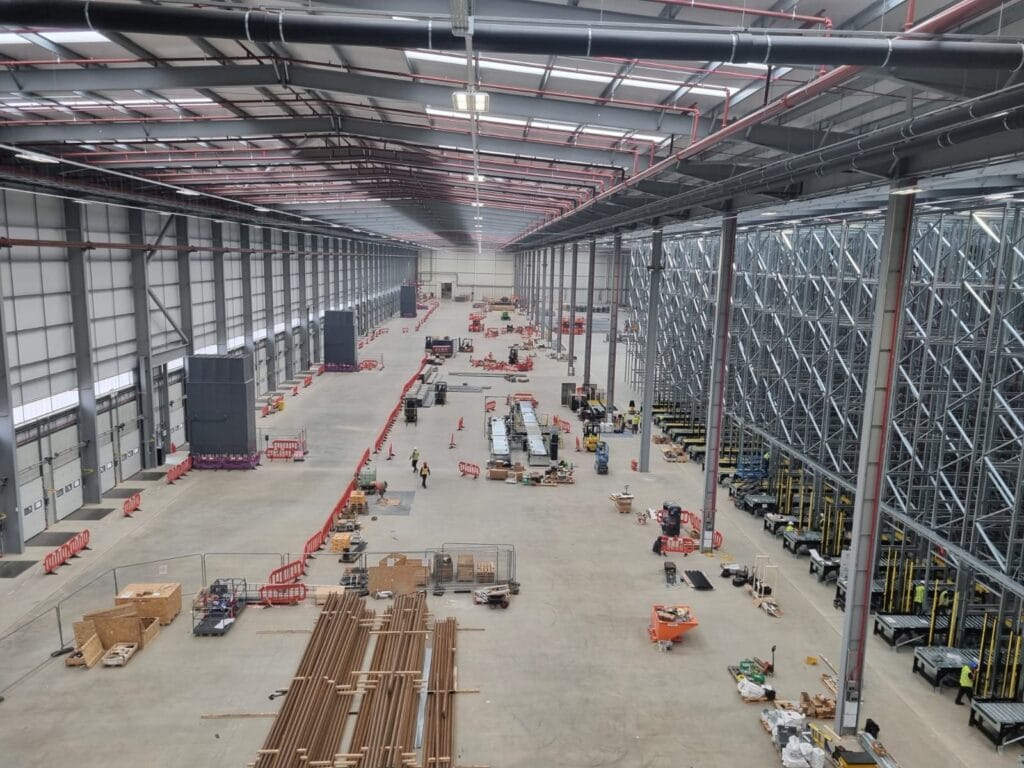
Air rotation systems are specifically designed to move large volumes of conditioned air around and through storage aisles, helping maintain more even temperatures across picking areas, dispatch zones and warehouse floor space.
This makes them particularly effective for logistics and fulfilment facilities where temperature consistency is essential.
Mezzanine floors can present additional heating challenges, particularly when both levels are occupied.
External air rotation units are capable of discharging conditioned air at heights of up to approximately 20 metres, allowing warm or cool air to reach upper levels while preserving valuable internal floor space.
This makes air rotation particularly suitable for warehouses where flexibility and unobstructed floor layouts are important.
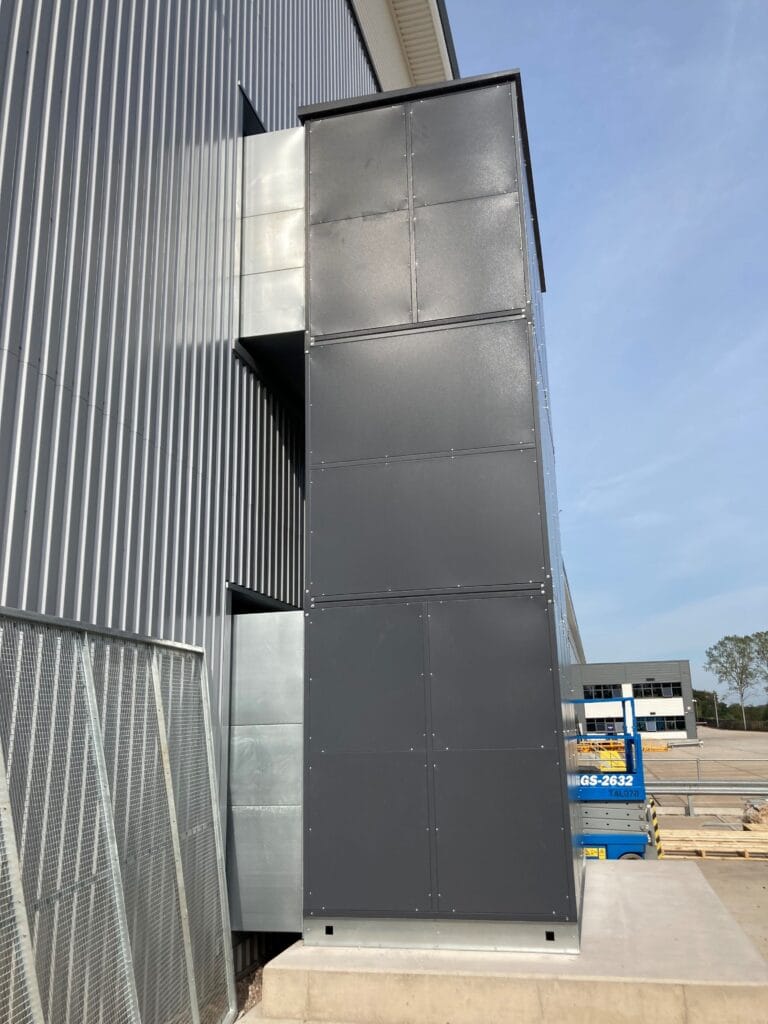
Air rotation systems are equally effective in new warehouse developments and refurbishment projects.
For new builds, the system can be designed into the building from the outset, ensuring optimum airflow and energy performance.
For existing warehouses, air rotation offers an attractive retrofit solution because it generally avoids the need for extensive ductwork or large central air handling units, helping minimise disruption during installation.
Every project should be individually designed, taking account of building dimensions, heat loss, occupancy and airflow requirements.
Air rotation systems can also utilise different heat sources, including heat pumps, gas or oil, providing flexibility to suit both traditional heating projects and building decarbonisation strategies.
Air source heat pumps have become an increasingly popular choice for warehouse heating, particularly where businesses are looking to reduce carbon emissions and improve energy efficiency.
Heat pumps work by extracting renewable heat from the outside air before transferring it into the building. Because they move heat rather than generate it through combustion, they can achieve significantly higher efficiencies than conventional heating systems.
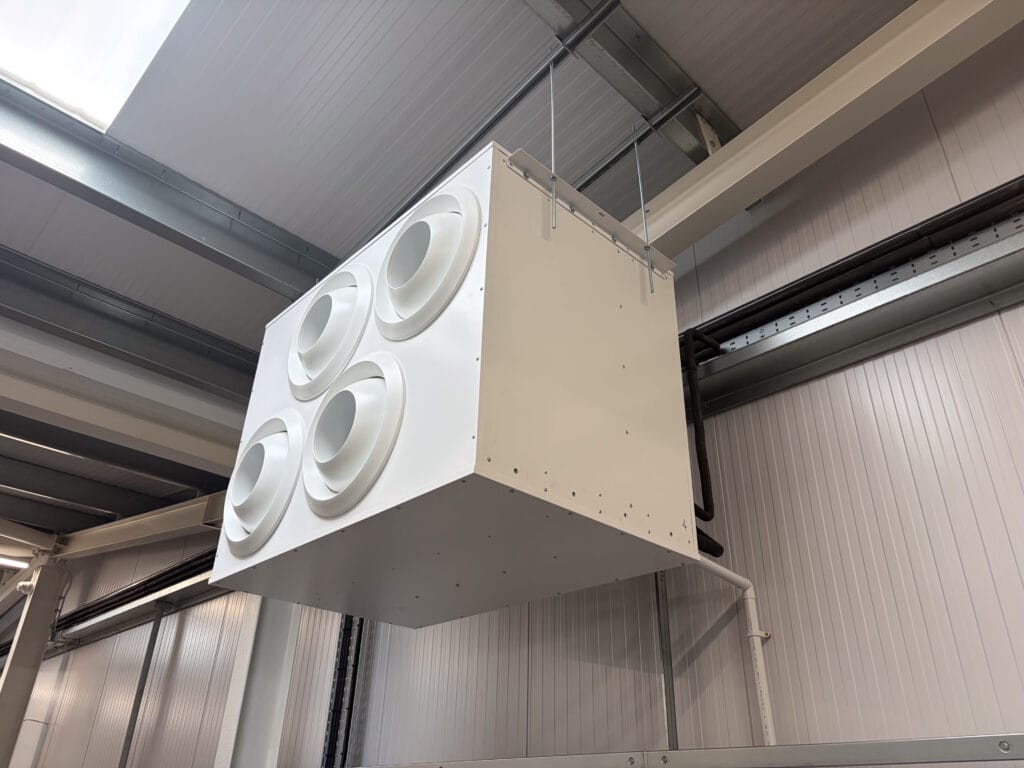
They are particularly suitable for:
Small warehouses
Industrial units
Workshops
Retail warehouses
Commercial buildings
Light manufacturing facilities
Many systems also provide cooling, making them an ideal year-round climate control solution.
For larger logistics buildings, however, distributing conditioned air effectively becomes the greater challenge. In these situations, combining heat pump technology with air rotation often provides the most effective solution.
Not every warehouse requires every cubic metre of space to be heated.
Where employees work in fixed locations, electric radiant heating can provide an efficient alternative by heating people and objects directly rather than warming the surrounding air.
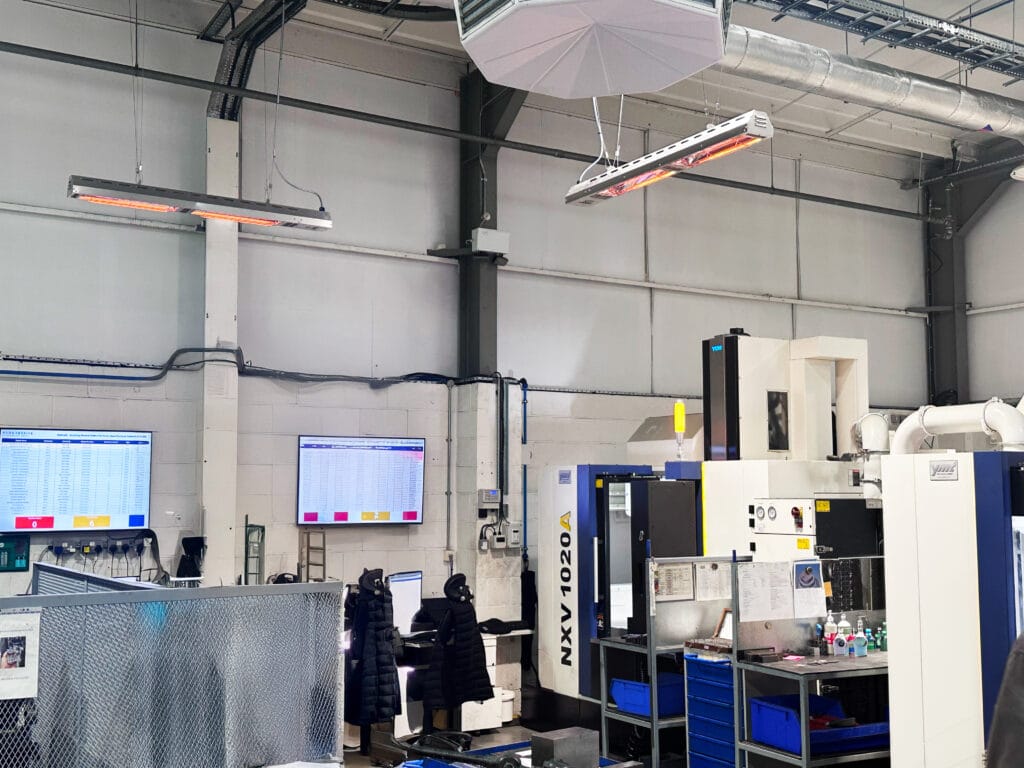
This makes radiant heating ideal for:
Loading bays
Dispatch areas
Assembly lines
Packing stations
Maintenance workshops
Individual workstations
Because radiant heaters deliver heat precisely where it’s needed, they can reduce unnecessary energy use in areas with intermittent occupancy or high air movement.
Rather than replacing a central warehouse heating system, radiant heating is often used alongside it to improve comfort in specific working zones.
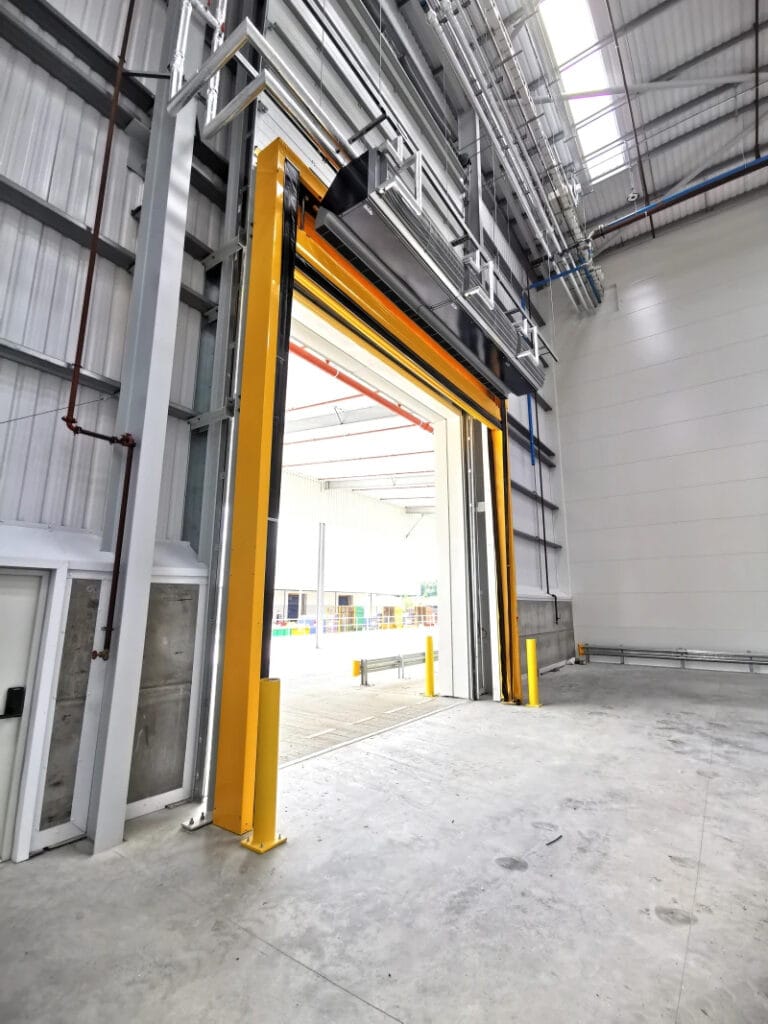
Roller shutter and loading bay doors are one of the biggest sources of heat loss in warehouses. Every time a door is opened for deliveries, dispatch or vehicle movements, large volumes of warm air escape while cold outside air enters the building. This can create uncomfortable working conditions, increase the demand on the heating system and lead to higher energy costs, particularly in busy distribution and logistics facilities. Installing an air curtain above frequently used doorways helps create an invisible barrier of high-velocity air, reducing the exchange of indoor and outdoor air without restricting access. By minimising heat loss, maintaining more stable internal temperatures and reducing the workload on the heating system, air curtains can improve comfort, lower operating costs and support a more energy-efficient warehouse environment.
Gas and oil-fired heating systems continue to play an important role within many industrial buildings.
For existing warehouses with established fuel infrastructure, they remain a reliable and cost-effective solution capable of delivering rapid warm-up times and dependable performance.
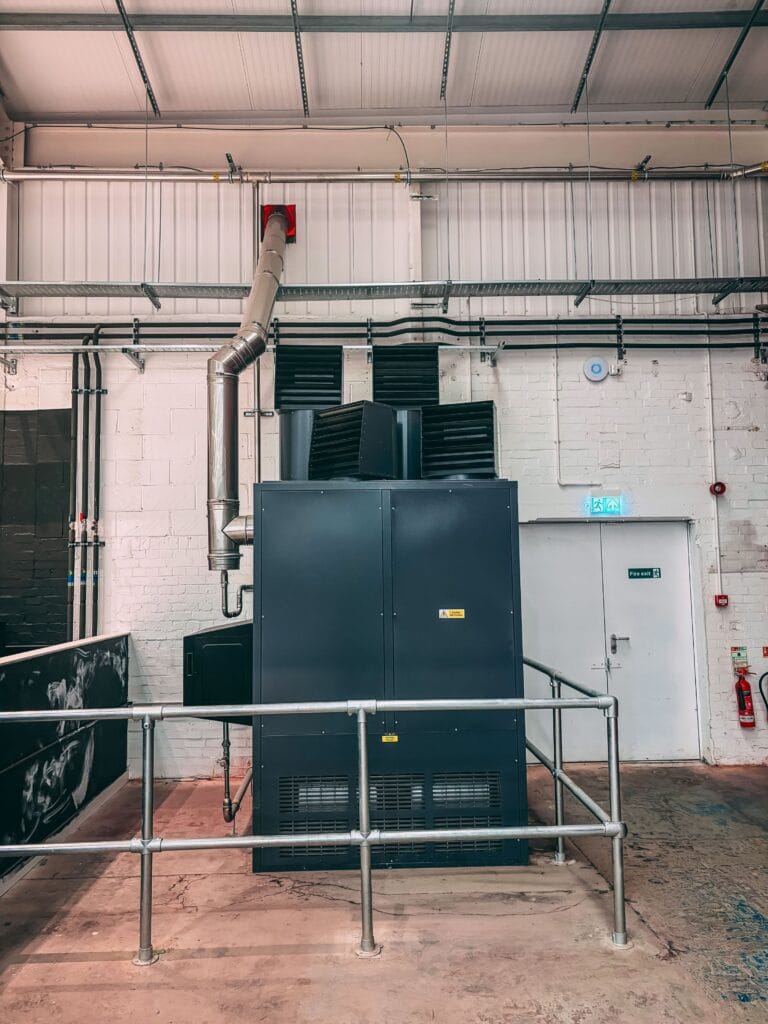
They’re particularly suited to:
Existing industrial buildings
Warehouse refurbishment projects
Smaller warehouses
Buildings with existing gas or oil supplies
Modern oil-fired systems are also increasingly compatible with renewable fuels such as HVO (Hydrotreated Vegetable Oil), helping businesses reduce lifecycle carbon emissions while making use of existing equipment.
For larger warehouses, however, improving heat distribution through air rotation may deliver greater efficiency gains than simply replacing the heat source alone.
As businesses work towards Net Zero targets, warehouse heating is becoming a major focus for reducing operational carbon emissions.
Improving a warehouse’s heating system can contribute towards:
Lower energy consumption
Reduced operating costs
Improved EPC ratings
Reduced carbon emissions
Future compliance with changing legislation
There is no single route to decarbonisation.
Some projects may be best suited to air source heat pumps, while others may benefit from hybrid systems, HVO-compatible heating or air rotation technology that improves the efficiency of existing plant.
The most successful projects consider both the heating equipment and how conditioned air is distributed throughout the building.
The best warehouse heating system is always the one designed around the building itself.
Building size, occupancy, roof height, insulation, operational requirements and future sustainability targets all influence the most appropriate solution.
A thorough design process should include:
Heat loss calculations
Airflow modelling
Building usage assessments
Energy performance analysis
Future decarbonisation objectives
By understanding how the building operates today—and how it may evolve in the future—consultants and building owners can select a heating solution that delivers long-term efficiency, comfort and reliability.
Every warehouse presents its own challenges, which is why real-world projects provide valuable insight into how different heating solutions perform.
Explore how Powrmatic has delivered warehouse heating solutions across a range of industrial applications, including:
B&M Distribution Centre – Large-scale logistics heating using air rotation technology.
ILG Distribution Centre – 46,800m³ distribution facility in Gatwick
Plot 2 Midlands Logistic Park– Warehouse heating solution for a massive 81,000m² building
Whether you’re planning a new warehouse development, upgrading an ageing heating system or exploring ways to improve energy efficiency, selecting the right solution starts with understanding your building.
Powrmatic works with consultants, contractors and building owners to design heating and climate control solutions for warehouses, logistics facilities and industrial buildings. From heat pumps and radiant heating to large-scale AirRoteX air rotation systems, every project is designed to suit the building, its operation and its long-term objectives.
Contact the team to discuss your project or arrange a site survey.

© 2019 - 2026 Powrmatic Ltd.