Improving a commercial or industrial EPC rating is becoming an increasingly important priority for building owners, landlords and occupiers. For older warehouses, factories, workshops and other industrial buildings, however, achieving a better EPC rating can be challenging — particularly where the building is heated by conventional oil-fired heating systems.
For commercial and industrial buildings currently using 28-second or 35-second oil, switching to HVO (Hydrotreated Vegetable Oil) could provide a practical way to reduce the carbon impact of the heating system and potentially improve the building’s EPC rating.
In suitable applications, existing oil-fired warm-air heaters may also be capable of operating on HVO with relatively minor changes. This means building owners may be able to improve the energy performance of an existing commercial or industrial property without immediately replacing the complete heating system.
For businesses looking to improve a commercial EPC rating, work towards EPC B or support wider net-zero and carbon-reduction targets, HVO heating is an option worth investigating.
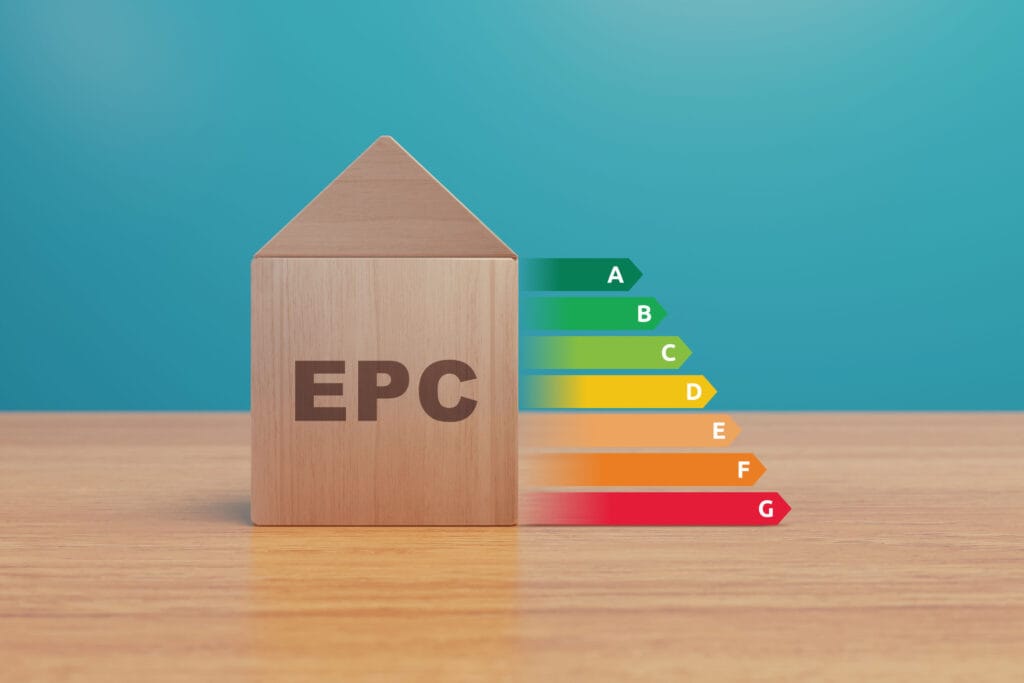
Energy Performance Certificates are becoming increasingly important across the commercial property sector.
For landlords, building owners and occupiers, a poor commercial EPC rating can affect future compliance planning, investment decisions, property improvements and long-term decarbonisation strategies.
The Government has proposed that privately rented non-domestic buildings over 1,000 m² will need to achieve an EPC B rating by 2031, where cost-effective and subject to the final legislation. Under the proposed approach, smaller privately rented non-domestic buildings below 1,000 m² would remain subject to the existing minimum EPC E standard.
This is particularly relevant for larger commercial and industrial properties such as:
For owners of these buildings, the question is increasingly becoming:
How can we improve our commercial or industrial EPC rating without replacing every piece of existing heating equipment?
For some oil-heated buildings, switching to HVO could form part of the answer.
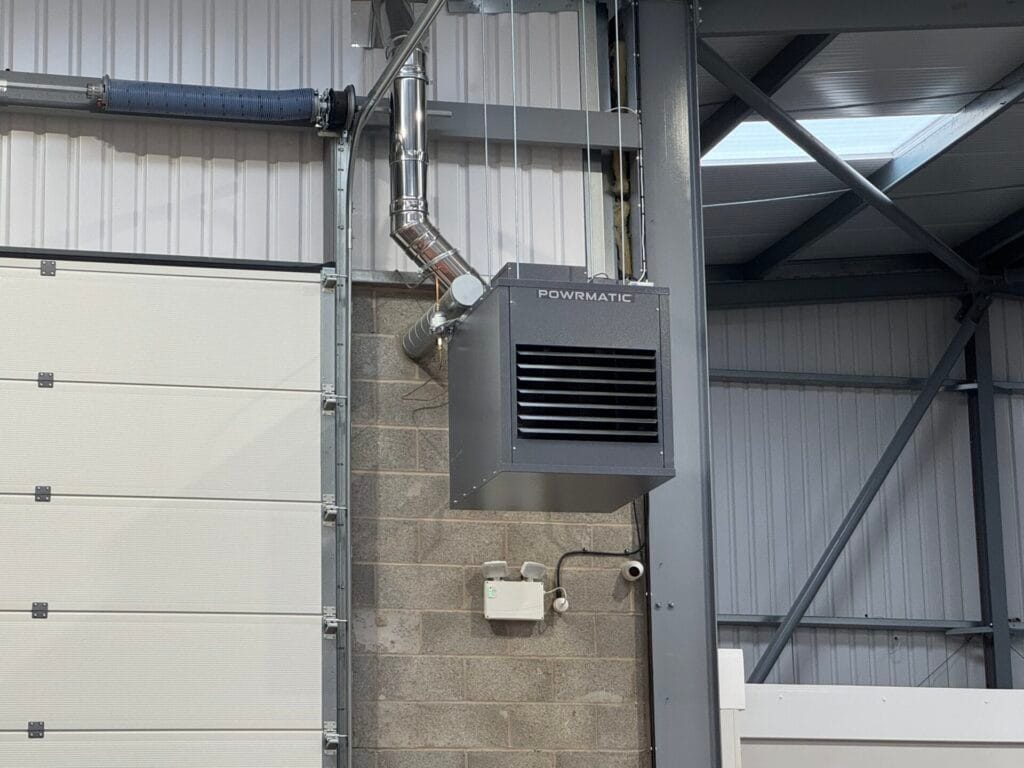
HVO stands for Hydrotreated Vegetable Oil. It is a renewable paraffinic fuel produced from renewable and waste-derived feedstocks and can be used as an alternative to conventional fossil fuels in suitable applications.
Depending on the specific product, feedstock and carbon-accounting methodology, HVO can offer a substantial reduction in lifecycle greenhouse-gas emissions compared with conventional fossil fuel.
For commercial and industrial buildings, one of the most important potential benefits of HVO is its compatibility with certain existing oil-fired heating systems.
Where the heater, burner and fuel system are suitable, it may be possible to switch from conventional heating oil to HVO without replacing the complete warm-air heating system.
This can make HVO heating for commercial and industrial buildings particularly attractive where:
A non-domestic EPC assesses the calculated energy performance of a commercial or industrial building.
The assessment considers a wide range of factors, including the building fabric, heating, lighting, ventilation, cooling, hot water and controls. The energy source used to heat the building can also have a significant impact on the calculated result.
For an older warehouse or industrial building, the existing heating equipment may still operate effectively. However, the carbon impact associated with conventional fossil heating oil can contribute to a poor EPC result.
Changing to an eligible lower-carbon fuel such as HVO may therefore help improve the calculated carbon performance of the heating system and, in suitable circumstances, contribute to a better commercial or industrial EPC rating.
The exact EPC improvement will always depend on the individual building, its heating system and the approved assessment methodology. HVO should not be treated as an automatic guarantee that every building will achieve EPC B.
However, for existing buildings with substantial oil-fired heating loads, the potential impact can be significant enough to justify detailed EPC modelling.
Potentially, yes — but the result will depend on the individual building. You also have to remember that HVO is usually 35–60% more expensive than conventional 35-second gas oil.
There is no single measure that will automatically take every commercial property to EPC B. An EPC rating is influenced by the complete building and its services.
However, where a large industrial building is currently heated by conventional oil, changing the heating fuel may have a significant impact on the modelled carbon performance.
For some properties, an HVO conversion may be combined with other improvements, including:
The most effective approach is to assess the existing building, identify the factors affecting its current EPC rating and then model the potential improvements before committing to major capital expenditure.
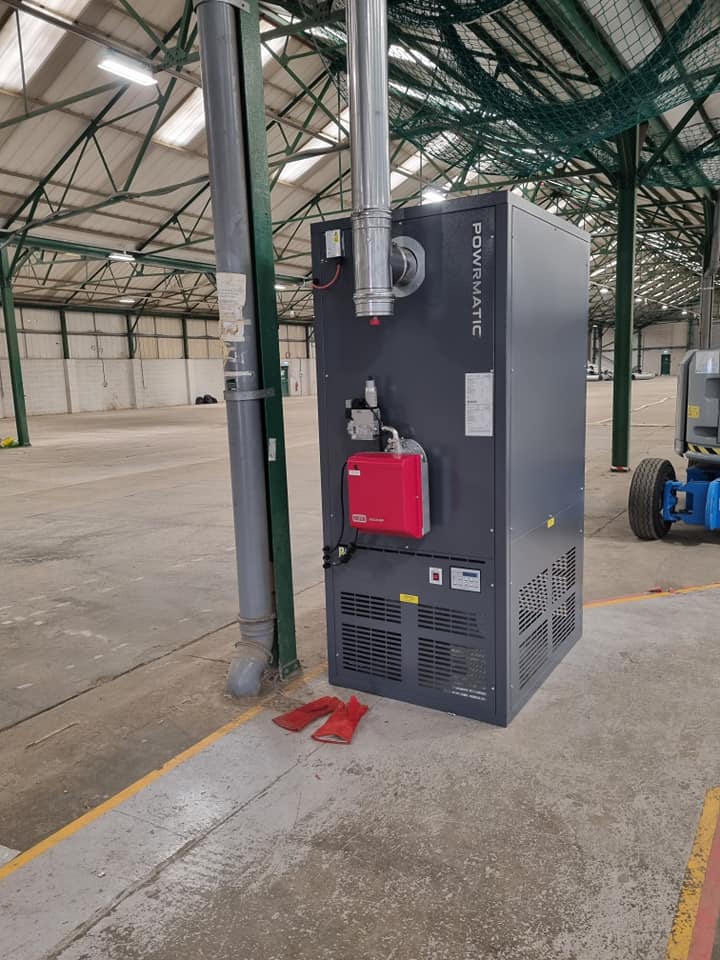
The potential impact of changing the heating fuel can be demonstrated through an example of an existing commercial and industrial property.
The building has a total floor area of approximately 5,677 m², including around 354 m² of two-storey office accommodation.
Constructed around 1980, the property consists of several interconnected warehouse areas. The building has metal-clad and asbestos-sheeted roof sections with rooflights, double-glazed PVC windows and varying internal heights.
The main warehouse areas are heated by forced-flued oil-fired warm-air heaters, with a combination of floor-mounted and ceiling- or roof-mounted units. The offices use electric panel heaters, while LED lighting has already been installed.

The EPC modelling demonstrated how changing from the existing conventional heating fuel to a lower-carbon fuel scenario could significantly improve the calculated energy performance of the building.
| Heating Scenario | SBEM EPC Rating | DSM EPC Rating |
|---|---|---|
| Existing Conventional Fuel Existing oil-fired commercial heating system |
G 154 |
E 121 |
| Lower-Carbon HVO Scenario Heating system modelled using a lower-carbon fuel scenario |
B 34 |
A 24 |
This is a project-specific modelling example and should not be interpreted as a guaranteed result for every HVO conversion.
However, it highlights an important consideration for owners looking to improve an industrial EPC rating: changing the fuel used by a large existing heating system can potentially have a major effect on the building’s calculated energy performance.
Before replacing an entire commercial heating system, it may therefore be worth investigating whether an HVO conversion could help achieve the required EPC improvement.
In suitable applications, existing oil-fired warm-air heaters may be capable of operating on HVO without requiring the complete heating system to be replaced.
This is particularly relevant to older warehouses, factories and industrial buildings where the existing warm-air heaters remain serviceable.
Existing warm-air heating equipment, including certain Powrmatic CXO and OUH heaters, may be suitable for operation on HVO with relatively minor changes, depending on the specific model, burner, age and condition of the equipment.
An HVO conversion assessment may include checking:
This creates an important opportunity for existing commercial and industrial buildings.
Rather than automatically removing a serviceable oil-fired warm-air heating system, it may be possible to adapt suitable equipment to operate on HVO.
This can help reduce capital expenditure, minimise disruption and extend the useful life of existing heating assets while supporting efforts to improve the building’s EPC rating.
For many older industrial buildings, a complete move to electric heating can be a major project.
Large warehouses and factories may have high peak heating demands and limited incoming electrical capacity. Replacing an existing oil-fired warm-air heating system with an electric alternative could require significant upgrades to the building’s electrical infrastructure as well as the installation of new heating equipment.
HVO can offer a practical alternative or transition route.
Where an existing oil-fired heating system is suitable for HVO, the building owner may be able to retain much of the existing equipment while changing to a lower-carbon fuel.
For businesses asking “How can I improve my commercial EPC rating?”, this can provide another option alongside more traditional energy-efficiency measures.
It may be particularly relevant for:

Improving a commercial EPC rating and achieving net zero are not the same thing, but the two objectives are closely connected.
Switching to HVO does not make a building net zero on its own. However, it can form part of a wider commercial building decarbonisation strategy.
For an existing oil-heated industrial building, a practical strategy may involve reducing energy demand, improving the building fabric and controls, and reducing the carbon impact of the remaining heating requirement.
HVO can support this process by providing a lower-carbon alternative to conventional fossil heating oil in suitable systems.
This may allow businesses to take action now while continuing to plan for longer-term improvements such as electrification, heat pumps, solar PV and further upgrades to the building fabric.
For companies with corporate net-zero targets, ESG objectives or carbon-reduction commitments, switching from conventional heating oil to HVO may therefore provide a practical step in the wider decarbonisation journey.
While HVO can significantly reduce carbon emissions and help improve the operational performance of a building, it does come at a higher fuel cost than conventional heating oil. As a guide, bulk commercial HVO is typically around 35–50p per litre more expensive than 35-second gas oil, and 50–65p per litre more expensive than 28-second kerosene, although prices vary depending on supplier, location and order volume.
For example, a commercial property using 50,000 litres of heating oil each year might pay around £42,500 for kerosene (at 85p per litre), compared with approximately £71,000 for HVO (at £1.42 per litre). That’s an additional annual fuel cost of around £28,500. However, for many organisations, the ability to achieve substantial carbon reductions without replacing existing heating equipment can make HVO an attractive short- to medium-term solution while planning longer-term decarbonisation projects.
HVO is now available from a growing number of commercial fuel distributors across the UK.
Commercial HVO suppliers include companies such as:
Availability, pricing, minimum delivery volumes and sustainability credentials will vary. Building operators should ensure that the HVO supplied is suitable for the intended heating application and obtain the relevant product and sustainability documentation.
If your warehouse, factory or commercial building is currently heated by 28-second or 35-second oil, it may be worth assessing the building before committing to a complete heating-system replacement.
A practical assessment should consider:
The objective should be to understand the most practical route towards a better commercial or industrial EPC rating.
For some buildings, HVO may be one part of a larger improvement programme. For others, particularly larger industrial properties with extensive oil-fired warm-air heating, changing the fuel could potentially make a significant contribution to improving the calculated EPC rating.
If your warehouse, factory, workshop or industrial building is currently heated by oil, Powrmatic can help you explore whether switching to HVO could support a better commercial or industrial EPC rating.
As a specialist in commercial and industrial warm-air heating, Powrmatic can assess whether your existing heating system may be suitable for conversion to HVO or recommend new HVO-compatible heating equipment where required.
A site visit can help assess your existing equipment, identify any modifications needed and explore how HVO heating could form part of your wider EPC improvement and net-zero strategy.
Contact Powrmatic today to arrange a site visit and discuss HVO heating for your commercial or industrial building.

© 2019 - 2026 Powrmatic Ltd.