The rapid rise of padel across the UK has led to a boom in indoor court construction, with developers, operators, architects and consultants all facing a common challenge: delivering effective padel court heating and cooling.
Whether converting an existing warehouse or designing a new-build facility, environmental control is now a fundamental part of padel court performance, user experience and operational efficiency. For owners, the focus is often on energy use, running costs and player satisfaction. For architects and consultants, it is about integrating the right HVAC strategy into the fabric, layout and use of the building from the earliest stages.
Padel is one of the fastest-growing sports in the UK, and much of that growth is being driven by indoor venues. As more clubs are developed, padel court heating and cooling is becoming a central part of successful facility design.
Unlike many traditional sports halls, padel courts create a very specific indoor environment. They combine enclosed court layouts, glazed walls, synthetic playing surfaces, high player activity and frequent occupancy changes throughout the day. All of this puts greater pressure on the building services strategy.
That means padel court heating and cooling is not simply about providing warm air in winter or cooling in summer. It is about creating a stable, controlled internal environment that supports comfortable play, reliable operation and a high-quality customer experience.
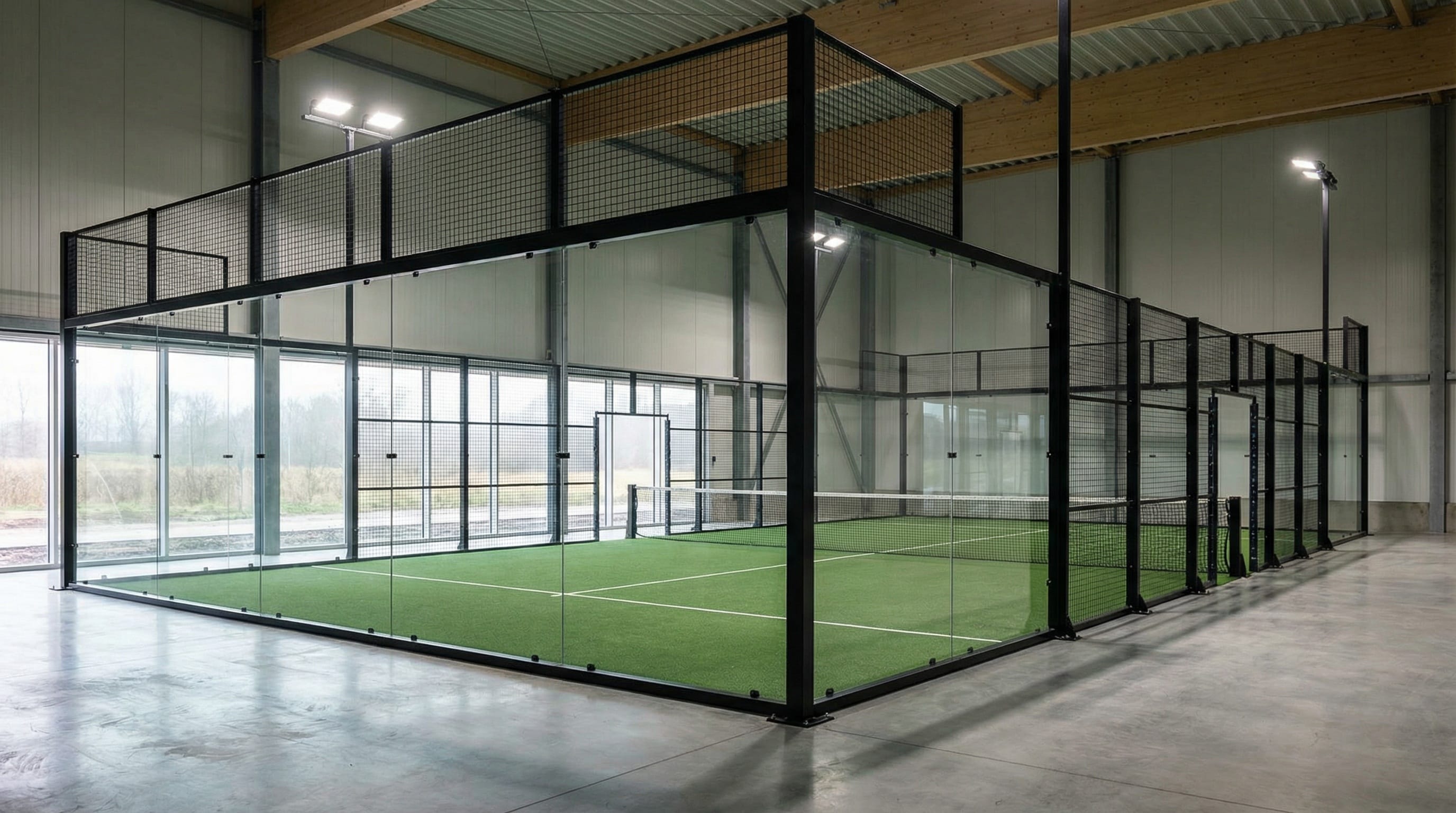
Effective padel court heating and cooling is essential for maintaining comfortable and consistent playing conditions. If temperatures vary too much, or if humidity is left unmanaged, the space can quickly become uncomfortable and the quality of play can be affected.
In many indoor padel environments, operators aim to maintain temperatures around 16°C to 20°C, while also controlling humidity levels to reduce the risk of condensation on glass walls and maintain safe, playable surfaces. Air movement is equally important. Poorly designed airflow can create draughts, which may affect ball flight and player comfort.
This is why padel court heating and cooling should be considered as part of the overall playing environment. It is not just a building service in the background. It directly influences usability, comfort and the perceived quality of the venue.
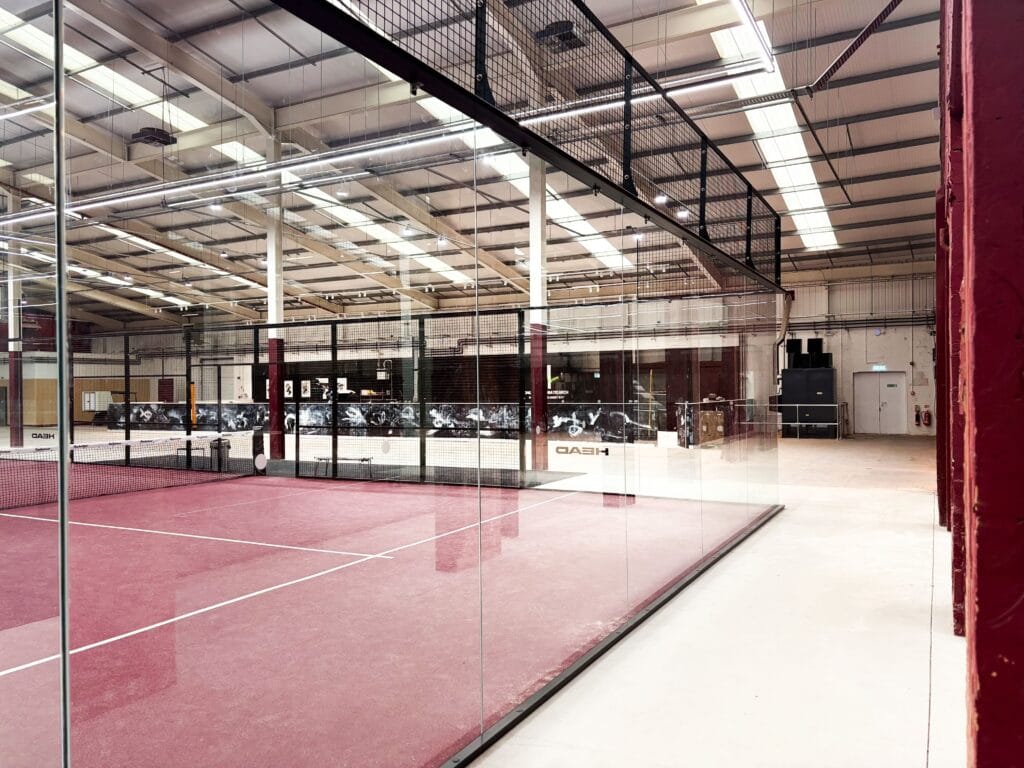
Many indoor padel venues are being created through the conversion of existing warehouses and industrial units. These buildings often offer the clear span and footprint needed for multiple courts, but they also present a number of HVAC challenges.
In these projects, padel court heating and cooling often begins as a heating-led requirement. Older industrial buildings may have poor insulation levels, older construction standards and weak U-values compared with current new-build expectations. They are also frequently tall spaces, with significant internal volume and minimal original environmental control.
In practical terms, that means large heat losses in winter and a tendency for warm air to rise and collect at high level. In many cases, cooling may not initially be included, especially if the brief is driven by capital cost, existing services or speed to market. Instead, the priority is often to establish effective and affordable heating.
One of the most important considerations in a converted warehouse is destratification. In high spaces, heated air naturally rises to roof level, which can leave the occupied playing zone feeling colder than expected while energy is wasted heating unused air at high level.
As part of a good padel court heating and cooling strategy, destratification helps return warm air back down into the occupied zone, reducing temperature differences between floor level and ceiling level and improving overall energy efficiency.
A typical example of this approach is the CECx destratification range, which can support better heat distribution in large-volume indoor sports spaces.
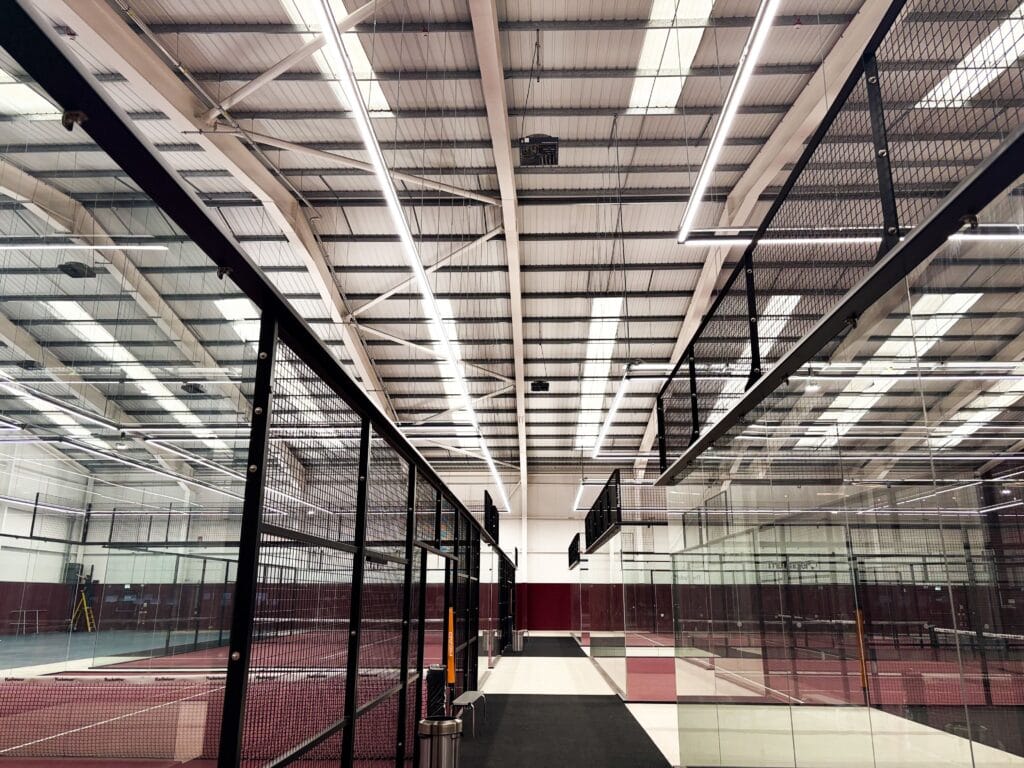
Where an existing gas supply is already in place, it is often utilised due to lower running costs and ease of integration. Common heating approaches for padel court heating and cooling in retrofit projects include:
Gas-fired solutions remain common in these environments due to cost-effective operation, compatibility with existing services and proven performance in industrial-style buildings.
An example of this type of project can be seen in this padel court heating case study at Racketeer Padel Club, Park Royal.
In contrast to converted buildings, new-build venues are typically designed with year-round internal comfort in mind from the outset. In these projects, padel court heating and cooling needs to address both heating and cooling in a balanced and efficient way.
These buildings are generally more airtight, better insulated and designed to current standards, which increases the need for controlled cooling and ventilation, particularly in high-occupancy environments.
For this reason, padel court heating and cooling in new-build environments usually needs to be considered as a full climate-control solution rather than a heating-only system.
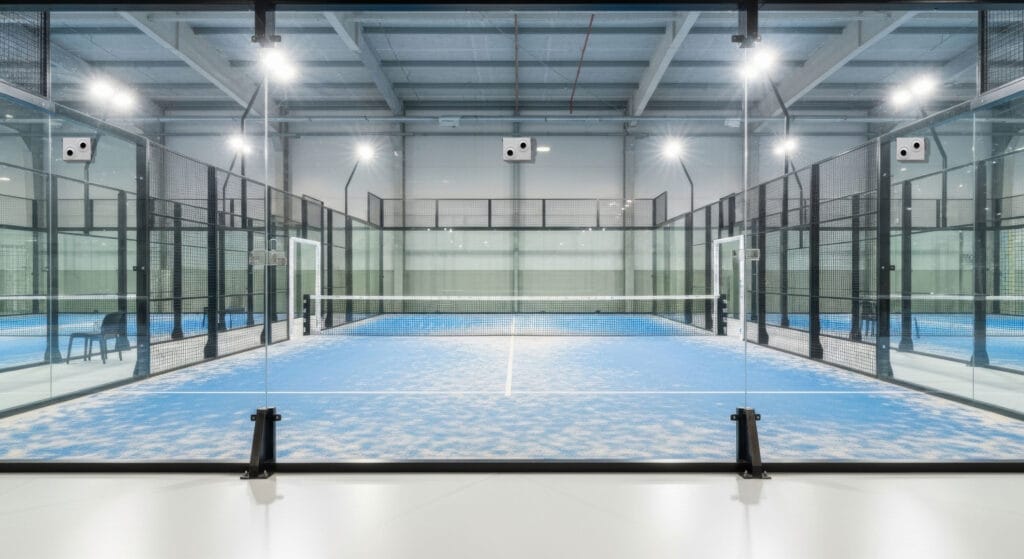
One option is a modular heat pump system such as Eeco-X. This type of system can be well suited to indoor padel environments because it can provide both heating and cooling without the same level of roof-mounted plant or extensive internal ductwork that other solutions may require.
For architects and consultants, that can offer advantages when roof space is limited, when the visual impact of services needs to be reduced, or when the internal arrangement of courts leaves little room for bulky ducted distribution.
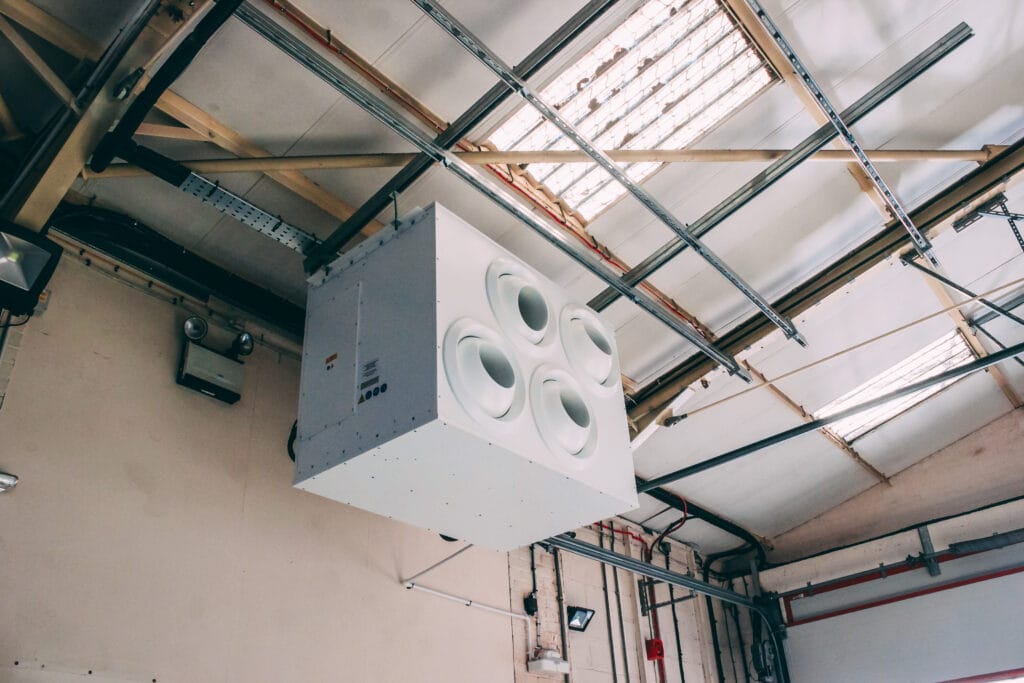
Chiller-based systems are another option, particularly for larger or more premium leisure developments. Chiller technology may form part of a wider cooling or heat pump strategy depending on the project requirements.
In larger facilities, external heat pumps with indoor ducted air distribution may also be used. These can provide a highly capable solution, but they generally require more coordination with the architectural design, including plant positioning, duct routes, ceiling void allowances and maintenance access.
For architects and consultants, padel court heating and cooling should never be treated as an afterthought. The internal layout of the venue will influence the performance of the HVAC design, and vice versa.
Court positioning, circulation routes, spectator areas, reception spaces, ancillary zones and ceiling heights all affect how air can be delivered into the space. Air distribution must be carefully designed to avoid direct draughts across the courts, while still maintaining even temperatures and effective control throughout the building.
Plant location is another major consideration. In new-build projects, external plant may need acoustic screening, structural support and service access. In converted spaces, plant positions may be constrained by existing structural elements, roof forms or neighbouring uses.
The design of padel court heating and cooling therefore needs to work alongside the court arrangement and building form, not be forced in afterwards. Early-stage coordination between the design team and HVAC specialists helps reduce compromise later in the project.
The success of any padel court heating and cooling strategy depends not only on the equipment selected, but also on the quality of the controls that manage it.
Indoor padel venues often experience large fluctuations in occupancy across the day, from quieter weekday periods to fully booked evening sessions and weekend peaks. Without effective controls, this can lead to wasted energy, inconsistent comfort and poor response to changes in demand.
Good HVAC controls help optimise operation by allowing temperature settings, zoning and schedules to reflect actual usage. This is especially important in multi-court venues where one part of the building may be in use while another is empty, or where reception, social and court spaces all have different environmental demands.
For owners, better controls can improve energy efficiency and reduce operating costs. For designers, they are essential to making sure the overall padel court heating and cooling concept performs as intended once the building is occupied.
There is no single approach to padel court heating and cooling that suits every project. A converted industrial unit has very different demands from a purpose-built venue, and even two similar buildings may require different solutions depending on occupancy, insulation, layout and available services.
The most effective outcomes usually come from a design-led approach that considers:
For both new-build and change-of-use projects, the goal should be to create a padel court heating and cooling solution that supports player comfort, system efficiency and long-term operational performance.
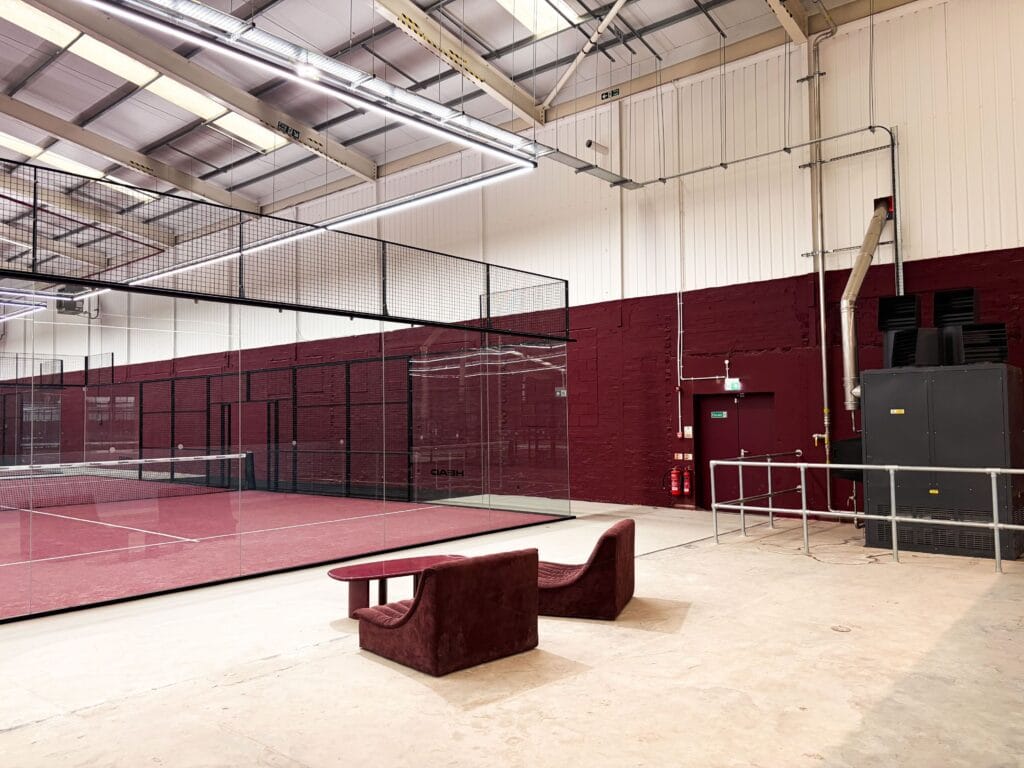
Powrmatic can support the design, selection and installation of HVAC solutions for indoor padel facilities, including both new-build developments and existing building conversions.
That support can include help with system design, product selection and identifying the most appropriate heating and cooling approach for the building type, usage pattern and layout. Whether the project requires warehouse heating with destratification, a modular heat pump approach for a new venue, or a wider climate-control strategy integrated into the building design, early collaboration can help optimise performance and reduce later design compromise.
As padel continues to grow, padel court heating and cooling is becoming a defining part of successful venue design. It affects not only thermal comfort, but also playability, energy performance, operating cost and the overall user experience.
In warehouse conversions, the focus is often on practical and efficient heating, supported by destratification and equipment suited to older industrial buildings. In new-build projects, the emphasis is increasingly on integrated year-round climate control, with both heating and cooling considered from the outset.
For owners, architects and consultants alike, the key is to treat padel court heating and cooling as part of the core design strategy, not a bolt-on service. With the right system design, equipment selection and controls approach, indoor padel venues can deliver consistent, comfortable and efficient playing environments now and into the future.
Whether you are planning a new facility or upgrading an existing venue, getting the padel court heating and cooling strategy right is critical to performance, efficiency and player experience.
To discuss your project requirements, system design or HVAC options, contact Powrmatic for expert guidance on the right solution for your indoor padel facility.

© 2019 - 2026 Powrmatic Ltd.